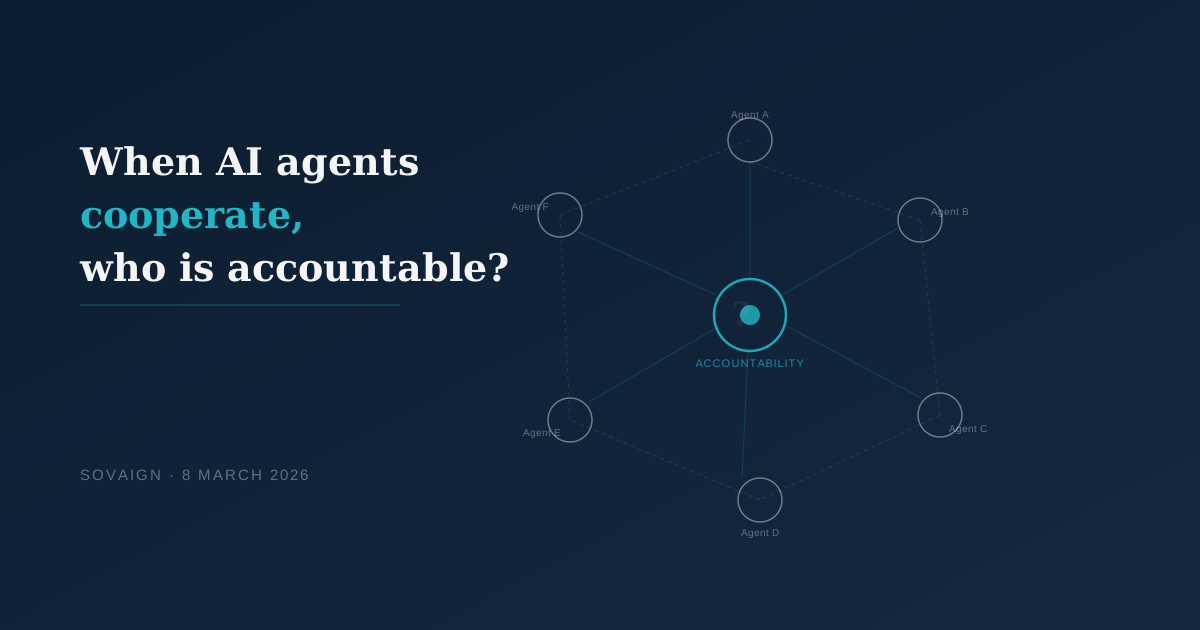
That gap is the subject of a draft standard — IACS-1.0, the Inter-Agent Cooperation Standard — submitted to NIST's AI Agent Standards Initiative in early 2026. The draft proposes 23 normative controls covering identity verification, delegated authority with scope attenuation, task contracting, provenance tracking, failure detection, and adversarial cooperation detection. It maps normatively to EU AI Act Articles 9–15, 26, 27, and 43.
The question IACS is trying to answer — "when Agent A delegates to Agent B, which invokes tools on a third party's behalf, who bears accountability for what happens?" — is exactly the question Sovaign's architecture is designed to make answerable. Obligations need to be traceable not just through documents, but through the decision chains that AI systems actually execute. That is the direction Phase 2 of Sovaign is pointed.
The full draft and context are on LinkedIn: IACS-1.0 — Inter-Agent Cooperation Standard (Tobias op den Brouw).